
Guangdong Lasunlight Technology Co.,Ltd.
How to Choose Quality Outdoor Spike Lights: The Ultimate Buying Guide
Enhancing your landscape with outdoor spike lights (also known as garden spotlights or ground stakes) adds both aesthetic appeal and security to your property. However, because these fixtures are exposed to the elements 24/7, choosing a high-quality product is essential to avoid frequent replacements.
Here is what you need to look for when selecting professional-grade outdoor spike lights.
IP Rating: The Shield Against Weather
The Ingress Protection (IP) rating is the most critical technical spec for any outdoor fixture. It tells you how well the light is protected against dust and water.
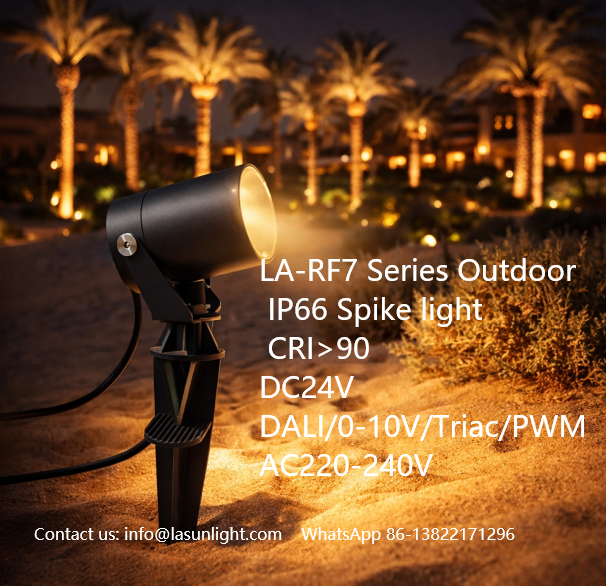
IP65/IP66: Protection against dust and water jets. This is the industry standard for most garden environments.
IP67/IP68: If your garden is prone to flooding or if you are installing lights near a pond or pool, look for these ratings, which allow for temporary or permanent immersion in water.
2. Material Matters: Durability and Corrosion Resistance
Low-quality materials will corrode or crack within a single season. Invest in the right housing:
Solid Brass or Copper: The gold standard. These materials age beautifully (developing a natural patina) and are virtually immune to corrosion.
316 Marine-Grade Stainless Steel: Essential if you live within 10 miles of the coast. Standard stainless steel will tea-stain and rust in salty air.
Die-Cast Aluminum: A cost-effective, sturdy choice. Ensure it has a high-quality powder-coated finish to prevent oxidation.
3. Lighting Performance and Aesthetics
A "qualified" light doesn't just work—it looks good. Pay attention to the light quality:
Color Temperature (CCT):
2700K - 3000K (Warm White): Creates a cozy, high-end atmosphere for trees and pathways.
4000K (Cool White): Better for modern architecture or high-security areas.
CRI (Color Rendering Index): Look for CRI > 80. This ensures that the greens of your plants and the colors of your flowers look vibrant and natural at night.
Anti-Glare Design: Choose fixtures with a shroud (hood) or recessed lens. This directs light toward the target rather than blinding people walking by.
4. Voltage Systems: Safety and Installation
Low Voltage (12V/24V): The safest and most popular choice for DIY and residential landscapes. It requires a transformer but eliminates the risk of dangerous electrical shocks if a cable is accidentally cut while gardening.
Line Voltage (120V/220V): Generally used for large-scale commercial projects. Requires professional installation and deep-conduit wiring.
5. Build Quality Check-List
Before purchasing, check these physical details:
Tempered Glass: Ensure the lens is tempered glass, which resists thermal shock and physical impact better than plastic.
Rubber Gaskets: High-quality silicone seals are necessary to keep moisture out of the internal electronics.
Cable Quality: Look for heavy-duty, UV-resistant rubber cables (like H05RN-F) rather than thin PVC wires.
Are you looking for technical specifications to list for a commercial lighting catalog ?
Welcome contact lasunlight outdoor llighting team: Email: info@lasunlight.com
Tel:+86-13822171296
Contact: Angie
Phone: +86-13822171296
Tel: +86-020-86214839
Email: info@lasunlight.com
Add: 2nd Floor, Building 7, No. 3 Huajiang Road, Xinhua Street, Huadu District, Guangzhou, China.
 Song
Song Arthur Song